If you store more than 200 litres of oil above ground in England, the Control of Pollution (Oil Storage) (England) Regulations 2001 apply. The headline requirement is secondary containment — a bund or equivalent — capable of holding 110% of the largest container or 25% of the total stored volume, whichever is greater. A spill kit is not a substitute for that bund. It is what you use alongside it, during transfers, after a bund overtopping, or when a drip reaches ground outside the containment area.
This guide sets out where a spill kit earns its place in a compliant oil-storage setup, how the Environment Agency's pollution-prevention guidance treats spill response, and the differences in Scotland (SEPA) and Wales (Natural Resources Wales). For the regulations themselves, read the 2001 regulations on legislation.gov.uk and the Environment Agency's pollution-prevention guidance at gov.uk.
What the 2001 Regulations require
The short version: any above-ground tank, IBC, drum, or mobile bowser storing oil over 200 litres needs secondary containment. The regulations set out construction, capacity, and integrity requirements. They also cover fill points, sight gauges, and drip trays.
The regulations do not mandate a spill kit by name. They do expect the site operator to manage foreseeable releases — and a spill kit is the recognisable, auditable way of doing that for the spill scenarios the bund does not cover.
Where a spill kit fits in a bunded setup
- Transfer operations. Coupling, decanting, and drum-to-IBC transfers happen outside the bund. Splashes and drips during transfer are where most reportable incidents start. An oil-only kit positioned at the transfer point handles that without absorbing water or rain.
- Residual liquid after containment. A bund that does its job catches the bulk. What is left after the tanker crew has left — the smear on the hardstanding, the drain-adjacent puddle — is spill-kit territory.
- Drain protection. Drain covers and spill socks stop product from reaching surface water if a bund fails or a spill travels. Keep them stored with the kit, not in a cupboard on the other side of the site.
- Bund overtopping or failure. Rainfall can push a contaminated bund over capacity. A spill kit and a plan for pumping and containing the overflow are what stop that becoming an Environment Agency case.
Drain-cover and watercourse protection
If any drain on your site goes to surface water, drain protection becomes disproportionately important. The Environment Agency treats drain-to-watercourse pollution as an aggravating factor in enforcement decisions. Drain covers (mat or putty), perimeter socks, and a clearly documented emergency shutdown sequence are what separate a near-miss from a prosecution.
If you are not sure whether your surface-water drains reach a watercourse, ask your utility or check your site drainage plan. Assume they do until proven otherwise.
Response plan documentation
An EA officer on site after an incident will want to see three things in quick succession: the secondary containment (the bund), the spill response arrangements (the kit and drain covers), and the evidence those arrangements are maintained (inspection records, training, incident log). The spill response checklist is a reasonable starting template — adapt it to your site and the products stored.
Equipment list for an oil-storage compliance setup
- Secondary containment sized per the regulations (the single non-negotiable item).
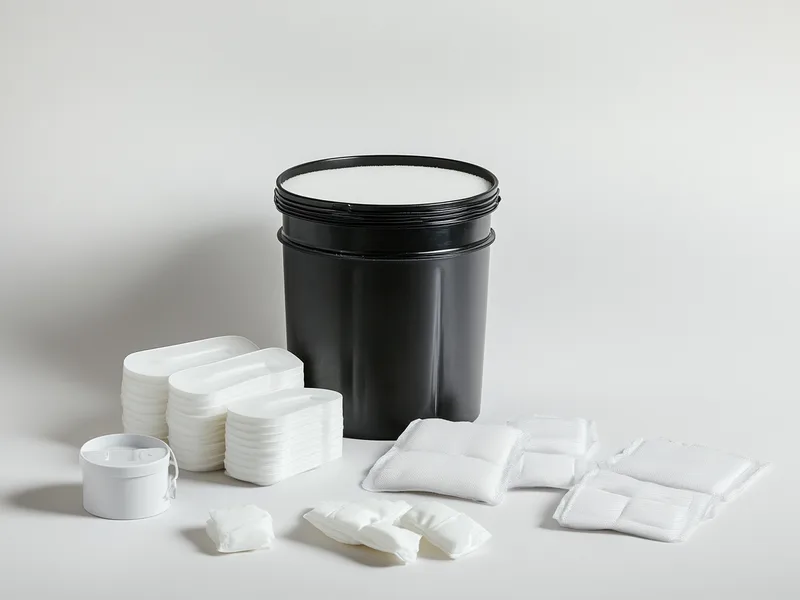
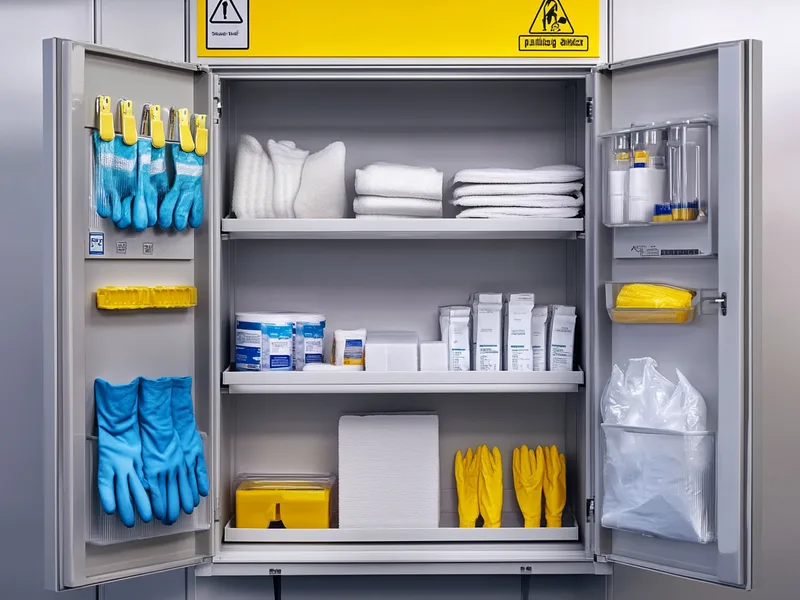
- Oil-only spill kit sized to the largest single container — typically 120L or 240L for drum stores, larger for IBC compounds.
- Drain covers and absorbent socks stored next to the kit.
- Spill station at the transfer point, with signage visible from the yard entrance.
- Monthly inspection record and incident log kept with the site H&S documentation.
- Training record for staff who transfer or decant oil.
Scotland (SEPA) and Wales (NRW)
The 2001 Regulations are England-specific. Scotland operates under the Water Environment (Oil Storage) (Scotland) Regulations 2006, enforced by SEPA. Wales has separate provisions under Natural Resources Wales. The principles are similar — secondary containment, pollution prevention, enforceable duties — but the thresholds, exemptions, and reporting obligations differ in detail. Check the correct regulator before finalising your setup.
FAQ
Do I need a spill kit if I have a bund? The regulations do not say you do. The Environment Agency's guidance and the reality of transfer operations say you do. A bund does not cover splashes, drips, or drain-adjacent response.
What size kit? Start with the largest single container you routinely handle outside the bund. For drum transfers, a 120L oil-only kit is a common default. For IBC sites, 240L or larger. See our sizing guide.
Oil-only or universal? Outdoors and near drains, oil-only — it repels water and does not waste absorbent on rainfall. Indoor plant rooms with mixed fluids can justify a universal. Our oil vs universal comparison covers the trade-off.
What about bioremediation or reporting? Any spill that reaches ground, drain, or watercourse is potentially reportable. Contact the EA incident hotline (0800 80 70 60) and document the response. Spill kits do not remove the reporting duty.
Getting a site-specific spec
If you want a kit specified against your bund size, drum count, and drain layout, send those details and we will come back with a defensible equipment list. Get an oil-storage quote.