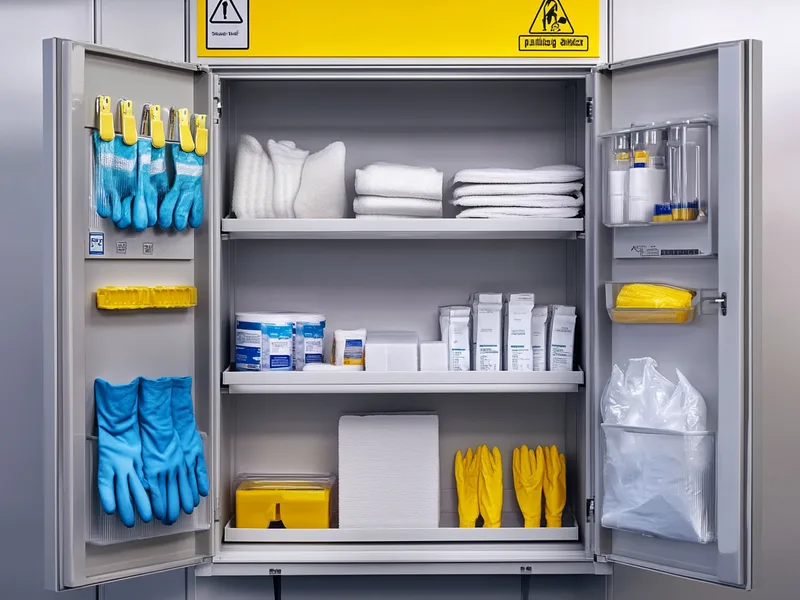
A spill response station is a dedicated, permanently stocked point where staff can access everything they need to deal with a spill — absorbents, PPE, disposal bags, and instructions — without having to search for it. For larger sites or areas with elevated spill risk, a station is significantly more effective than a standalone spill kit.
What a Spill Response Station Includes
A well-specified station should contain the following as a minimum:
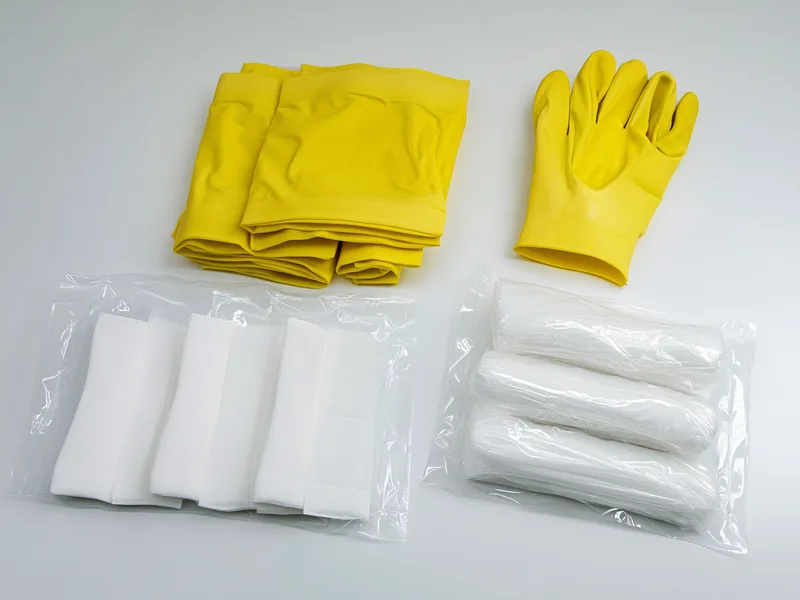
- Absorbent pads — a mix of heavyweight and lightweight absorbent pads for covering and soaking up spilled liquid on flat surfaces.
- Absorbent socks — spill socks for containing and damming the spread of liquid, particularly around drains and across floor channels.
- Loose absorbent or pillows — for irregular surfaces, under machinery, and areas where pads cannot lie flat.
- Disposal bags — heavy-duty bags (and cable ties) for containing used absorbents as hazardous or contaminated waste.
- PPE — chemical-resistant gloves, safety goggles, and (depending on the substances involved) a disposable coverall or apron.
- Drain covers — neoprene or polyurethane drain mats that can be placed over floor drains to prevent contaminated liquid entering the drainage system.
- Signage — a clear sign identifying the station, its contents, and basic instructions for use. This is not optional — in an emergency, people need to know what is available without opening every container.
Where to Place It
Location is everything. A perfectly stocked spill station in the wrong place is almost as useless as not having one at all. The station should be:
- Within 30 seconds' walk of the highest-risk area it serves. If it takes longer than that to reach, the spill will have spread significantly before response begins.
- Visible and accessible — not behind racking, not blocked by pallets, not inside a locked store room. Wall-mounted or free-standing stations at the end of aisles, near doorways, or adjacent to storage compounds work best.
- Away from the spill path. Do not position the station directly below a potential leak source or in the expected flow path of a major spill. If the station itself gets contaminated, you have lost your response capability.
- Near drainage points. If there is a floor drain or channel in the area, position the station nearby so drain covers can be deployed quickly — stopping liquid from entering the drainage network is often the single most important action in the first few seconds.
For sites with multiple risk zones, deploy a station in each zone rather than relying on one central point. Browse our spill stations range for pre-configured options.
Contents Checklist
Use this checklist when specifying or restocking a spill response station:
- 20–50 absorbent pads (type matched to liquid risk)
- 4–8 absorbent socks (1.2m length)
- 2–4 absorbent pillows or cushions
- 5–10 heavy-duty disposal bags with ties
- 2 pairs chemical-resistant gloves
- 1 pair safety goggles
- 1–2 drain covers (if floor drains present)
- Laminated spill response instruction card
- Station contents inventory card (for inspection)
For chemical spill stations, add a disposable coverall or apron and consider whether respiratory protection is required based on your COSHH assessments.
Maintenance Schedule
A spill station only works if it is stocked, accessible, and in good condition. Set up a simple maintenance routine:
- Monthly inspection: check that all contents are present, undamaged, and within date (for PPE). Verify the station is accessible and signage is visible. Record the check on the inventory card or your digital inspection system.
- After every use: restock immediately. Any absorbent that has been used, even partially, should be replaced. Do not return used pads or socks to the station. Order refill packs to keep restocking simple.
- Quarterly review: assess whether the station contents still match the risk profile. Has the area changed? Are different substances being stored? Has the layout shifted? Update the specification if needed.
- Annual audit: include spill stations in your environmental and H&S audit programme. Check training records to ensure enough staff in each area know how to use the station.
Getting Started
If you are setting up a spill response station for the first time, start with the risk assessment for the area it will serve. Identify the liquid types, the maximum credible spill volume, and the nearest drainage points. That gives you the specification. If you would like us to recommend a station setup based on your requirements, contact us with a brief description of the area and we will put together a contents list and quote.